


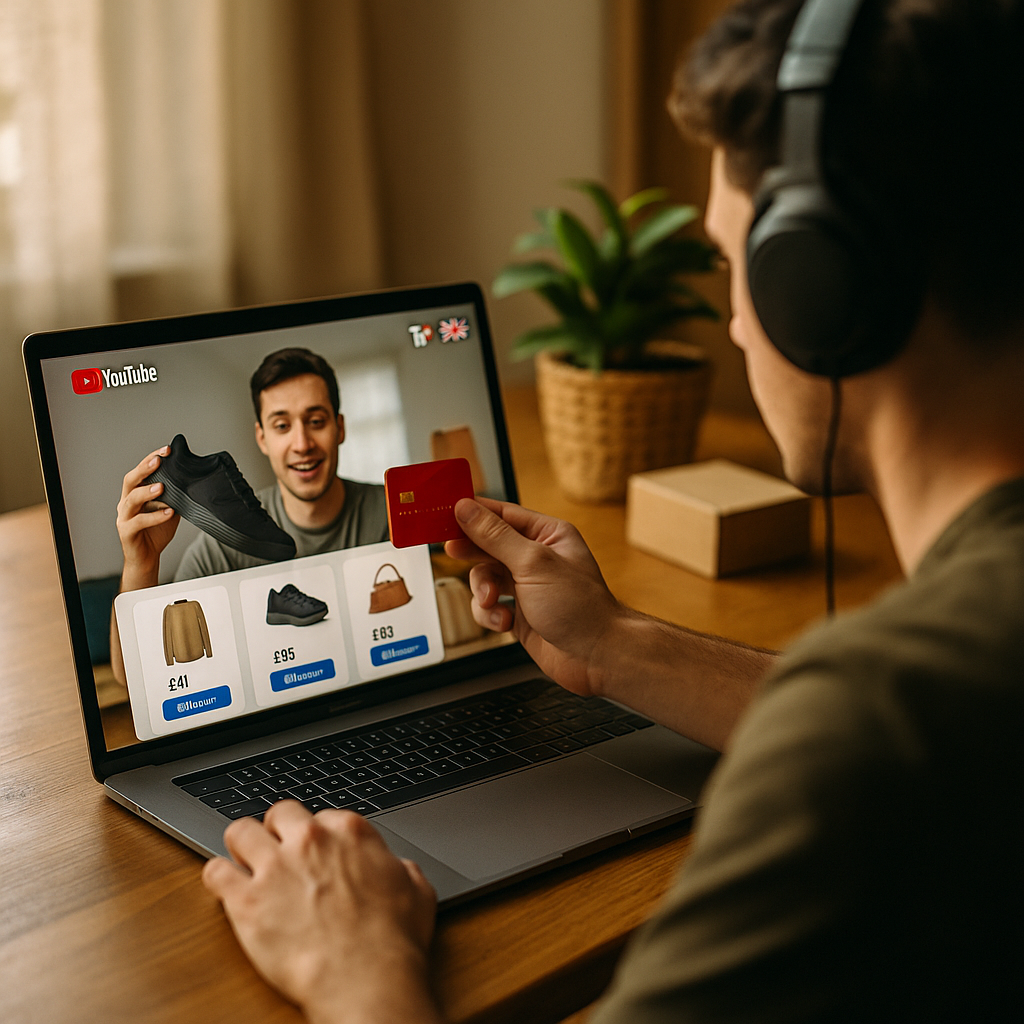
UK creators can now earn affiliate commission on tens of thousands more products through YouTube Shopping, and most brands haven’t touched their creator briefs to reflect it. That’s a problem. The YouTube shopping affiliate program just expanded its UK catalog significantly, and it changes the commercial logic of every YouTube partnership you’re currently running.
If your team still treats YouTube as a one-off sponsorship channel, you’re leaving performance-based revenue on the table.
What Actually Changed
YouTube’s Shopping affiliate program lets creators tag products directly in videos, Shorts, and livestreams, earning a commission when viewers buy through those links. The UK expansion widens eligible retailer catalogs and opens the program to a broader tier of channels, not just the mega-creators Google previously handpicked for pilots.
Practically, this means a mid-tier UK beauty or home-goods channel with 40,000 subscribers can now plug into affiliate commerce without waiting for a brand deal to materialize. They tag the product, YouTube handles the transaction infrastructure, and commission flows automatically. No negotiation, no invoice, no 60-day payment terms.
The shift from negotiated flat fees to platform-native commission structures means brands no longer fully control creator economics on YouTube — the platform does.
That’s a meaningful power transfer. For years, brands set the terms of creator compensation through direct deals. Now YouTube’s commission rates, catalog eligibility, and payout timing sit outside brand control entirely. You can still run paid sponsorships alongside affiliate tagging, but the affiliate layer now operates independently, whether you’ve briefed for it or not.
Why Brands Should Care About Commission Math, Not Just Reach
Reach metrics get the attention in creator pitches. Commission structures get ignored until finance asks why influencer spend isn’t reconciling with attributed sales. That gap is exactly where the expanded program bites.
Here’s the practical shift: a creator earning affiliate commission on your product has a direct financial incentive to keep that video discoverable and evergreen. Unlike a sponsored post that dies after a week, an affiliate-tagged video keeps earning as long as it keeps ranking and converting. That changes creator behavior. Expect more creators optimizing titles, thumbnails, and descriptions for long-tail search rather than launch-day virality.
It also changes what “success” looks like in your reporting. A branded integration measured only by CPM or view count misses the compounding value of an affiliate-tagged video still converting six months later. If your attribution model doesn’t separate one-time sponsorship value from ongoing affiliate revenue, you’re underreporting ROI on every creator who dual-monetizes.
- Affiliate commission rates on YouTube typically range by category and retailer, often mirroring standard e-commerce affiliate benchmarks rather than a flat platform rate.
- Commission-bearing videos tend to stay live and promoted by creators longer, since deletion means forfeiting future earnings.
- Creators dual-monetizing (flat fee plus affiliate) will negotiate lower upfront fees in exchange for commission upside — a trade worth taking if your product converts well.
Building a Commission-Aware Creator Brief
Most creator briefs still treat YouTube like a billboard: pay once, get a placement, move on. The expanded affiliate program demands a different brief structure, one that accounts for hybrid compensation from day one.
Start by clarifying which SKUs are actually eligible for affiliate tagging in the UK catalog. Not every product qualifies, and eligibility can shift by retailer partnership. Confirm this before you brief creators, or you’ll promise commission upside that never materializes.
Second, decide your stance on stacking. Will you pay a flat sponsorship fee and let creators additionally earn affiliate commission? Many brands say yes, treating the affiliate layer as a performance bonus on top of guaranteed pay. Others reduce flat fees for creators who opt into affiliate tagging, essentially converting part of the deal to a pay-for-performance model. Both are valid, but your finance team needs to know which one you’re running before contracts go out.
Third, build disclosure requirements into the brief explicitly. UK advertising rules under the Advertising Standards Authority require clear labeling of affiliate and paid relationships, and YouTube’s own recommendation systems increasingly factor in disclosure compliance. Creators who skip disclosure risk more than a fine, they risk algorithmic suppression. That’s consistent with how undisclosed sponsorships get penalized across the platform now.
The Retention Angle Nobody’s Briefing For
Here’s something most brands miss: affiliate revenue on YouTube correlates heavily with watch time and retention, not just click-through. YouTube’s algorithm favors videos that hold attention, and product-tagged content that gets clipped short or feels like a rushed ad read simply won’t surface to enough viewers to generate meaningful commission.
This lines up with broader platform shifts. YouTube Shorts already rewards retention over volume, and long-form Shopping content follows the same logic. A creator who rushes through a product tag in the first ten seconds and moves on will underperform one who builds a genuine narrative around the product, even if the second video is longer and less “efficient.”
Brief for retention, not just for the tag placement. Ask creators to build product mentions into the substance of the video, not bolt them on. It’s a harder ask, but it’s the difference between a video that earns commission for a week and one that earns for a year.
Compliance Risk Doesn’t Disappear, It Multiplies
Affiliate commerce introduces a new compliance layer brands can’t ignore. When a creator earns commission on every sale, there’s financial incentive to overstate product claims, especially in categories like supplements, skincare, and wellness where conversion pressure already creates compliance risk on other platforms.
UK regulators haven’t been shy about enforcement here. The UK government’s consumer protection guidance, alongside ASA rulings, treats affiliate commission the same as any other material connection: it must be disclosed, clearly and consistently, not buried in a description box nobody reads.
Build a compliance checklist into your creator onboarding specific to affiliate tagging:
- Confirm the creator understands UK-specific disclosure wording requirements, not just YouTube’s generic paid promotion toggle.
- Audit sample content before affiliate links go live, especially for regulated categories.
- Set a review cadence for evergreen affiliate videos, since product claims that were compliant at launch can age poorly as regulations or product formulations shift.
- Document commission rates and payment flows for your own reporting, since YouTube’s payout structure won’t automatically sync with your internal attribution tools.
Skipping this step is how brands end up with a viral, high-converting video that also becomes a liability the moment a regulator or journalist takes a closer look.
How This Fits the Broader Shoppable Video Trend
YouTube isn’t moving in isolation. Shoppable video has become the default expectation across every major platform, and brands running multi-platform creator programs need a consistent operational approach rather than a patchwork of platform-specific rules.
The mechanics echo what’s already playing out with shoppable commerce on Shorts and LinkedIn video, and it rhymes with TikTok’s own evolution toward purchase-intent routing that rewards content built for conversion, not just entertainment.
What’s different about YouTube’s approach is the emphasis on long-form and evergreen content. TikTok Shop thrives on urgency and trend-cycle velocity. YouTube’s affiliate model rewards patience, search optimization, and content that ages well. That’s a genuinely different creative brief, and treating YouTube like TikTok with a longer runtime is a mistake plenty of brands are already making.
According to eMarketer, retail media and creator-driven commerce continue to capture growing share of digital ad budgets globally, and UK marketers specifically are under pressure to prove incremental ROI from influencer spend rather than just reach. An affiliate model that generates traceable, ongoing commission data is actually a gift here, if your measurement stack is built to capture it.
What to Do With Your Existing Creator Roster
Don’t wait for contract renewal to address this. Audit your current UK YouTube partnerships now and identify which creators are already affiliate-eligible for your product catalog. Some may already be tagging your products without your knowledge, earning commission you haven’t tracked or reported internally.
Reach out proactively. Offer guidance on disclosure, confirm which SKUs you want prioritized, and consider renegotiating flat fees where affiliate upside is now part of the equation. Creators will respect the transparency, and you’ll avoid the awkward discovery, months later, that your top-performing YouTube video was never actually briefed as a sponsorship at all.
This also affects how you evaluate new creator partnerships. A channel with modest subscriber counts but strong search rankings and retention might outperform a bigger name on affiliate revenue alone. Reassess your selection criteria accordingly, and don’t let subscriber count be the only filter your team applies.
Frequently Asked Questions
FAQs
What is YouTube’s shopping affiliate program?
It’s a feature that lets eligible UK creators tag products directly in videos and Shorts, earning a commission on sales generated through those tagged links, without requiring a direct brand sponsorship deal.
How is this different from a standard influencer sponsorship?
Sponsorships involve a negotiated flat fee paid regardless of sales outcome. Affiliate commission is performance-based, paid only when a viewer completes a purchase through the tagged product link, and it can continue generating revenue long after the video’s initial publish date.
Do brands need to pay creators separately for affiliate tagging?
Not necessarily. Many brands stack affiliate commission on top of an existing flat sponsorship fee, while others negotiate reduced upfront fees in exchange for affiliate participation. The structure is a business decision each brand should set clearly in the creator brief.
What compliance rules apply to UK creators using affiliate links?
Creators must clearly disclose affiliate relationships in line with ASA guidance and UK consumer protection rules. Disclosure needs to be prominent and unambiguous, not buried in a description box, and brands should audit content before affiliate links go live, especially in regulated categories like health and wellness.
Which products are eligible for the expanded UK catalog?
Eligibility depends on retailer partnerships and product category, and it can change over time. Brands should confirm specific SKU eligibility directly before briefing creators to avoid promising commission opportunities that don’t actually exist.
Does affiliate tagging affect a video’s algorithmic reach?
Retention and watch time remain the primary drivers of YouTube’s recommendation system. Videos that integrate product mentions naturally, rather than as a rushed add-on, tend to perform better both for discovery and for affiliate conversion.
Next step: audit your active UK YouTube creator partnerships this week, confirm affiliate eligibility on your top SKUs, and update your standard creator brief to define stacking, disclosure, and payout terms before your next contract cycle begins.
FAQs
What is YouTube’s shopping affiliate program?
It’s a feature that lets eligible UK creators tag products directly in videos and Shorts, earning a commission on sales generated through those tagged links, without requiring a direct brand sponsorship deal.
How is this different from a standard influencer sponsorship?
Sponsorships involve a negotiated flat fee paid regardless of sales outcome. Affiliate commission is performance-based, paid only when a viewer completes a purchase through the tagged product link, and it can continue generating revenue long after the video’s initial publish date.
Do brands need to pay creators separately for affiliate tagging?
Not necessarily. Many brands stack affiliate commission on top of an existing flat sponsorship fee, while others negotiate reduced upfront fees in exchange for affiliate participation. The structure is a business decision each brand should set clearly in the creator brief.
What compliance rules apply to UK creators using affiliate links?
Creators must clearly disclose affiliate relationships in line with ASA guidance and UK consumer protection rules. Disclosure needs to be prominent and unambiguous, not buried in a description box, and brands should audit content before affiliate links go live, especially in regulated categories like health and wellness.
Which products are eligible for the expanded UK catalog?
Eligibility depends on retailer partnerships and product category, and it can change over time. Brands should confirm specific SKU eligibility directly before briefing creators to avoid promising commission opportunities that don’t actually exist.
Does affiliate tagging affect a video’s algorithmic reach?
Retention and watch time remain the primary drivers of YouTube’s recommendation system. Videos that integrate product mentions naturally, rather than as a rushed add-on, tend to perform better both for discovery and for affiliate conversion.
Top Influencer Marketing Agencies
The leading agencies shaping influencer marketing in 2026
Agencies ranked by campaign performance, client diversity, platform expertise, proven ROI, industry recognition, and client satisfaction. Assessed through verified case studies, reviews, and industry consultations.
Moburst

-
2

The Shelf
Boutique Beauty & Lifestyle Influencer AgencyA data-driven boutique agency specializing exclusively in beauty, wellness, and lifestyle influencer campaigns on Instagram and TikTok. Best for brands already focused on the beauty/personal care space that need curated, aesthetic-driven content.Clients: Pepsi, The Honest Company, Hims, Elf Cosmetics, Pure LeafVisit The Shelf → -
3

Audiencly
Niche Gaming & Esports Influencer AgencyA specialized agency focused exclusively on gaming and esports creators on YouTube, Twitch, and TikTok. Ideal if your campaign is 100% gaming-focused — from game launches to hardware and esports events.Clients: Epic Games, NordVPN, Ubisoft, Wargaming, Tencent GamesVisit Audiencly → -
4

Viral Nation
Global Influencer Marketing & Talent AgencyA dual talent management and marketing agency with proprietary brand safety tools and a global creator network spanning nano-influencers to celebrities across all major platforms.Clients: Meta, Activision Blizzard, Energizer, Aston Martin, WalmartVisit Viral Nation → -
5

The Influencer Marketing Factory
TikTok, Instagram & YouTube CampaignsA full-service agency with strong TikTok expertise, offering end-to-end campaign management from influencer discovery through performance reporting with a focus on platform-native content.Clients: Google, Snapchat, Universal Music, Bumble, YelpVisit TIMF → -
6

NeoReach
Enterprise Analytics & Influencer CampaignsAn enterprise-focused agency combining managed campaigns with a powerful self-service data platform for influencer search, audience analytics, and attribution modeling.Clients: Amazon, Airbnb, Netflix, Honda, The New York TimesVisit NeoReach → -
7

Ubiquitous
Creator-First Marketing PlatformA tech-driven platform combining self-service tools with managed campaign options, emphasizing speed and scalability for brands managing multiple influencer relationships.Clients: Lyft, Disney, Target, American Eagle, NetflixVisit Ubiquitous → -
8

Obviously
Scalable Enterprise Influencer CampaignsA tech-enabled agency built for high-volume campaigns, coordinating hundreds of creators simultaneously with end-to-end logistics, content rights management, and product seeding.Clients: Google, Ulta Beauty, Converse, AmazonVisit Obviously →